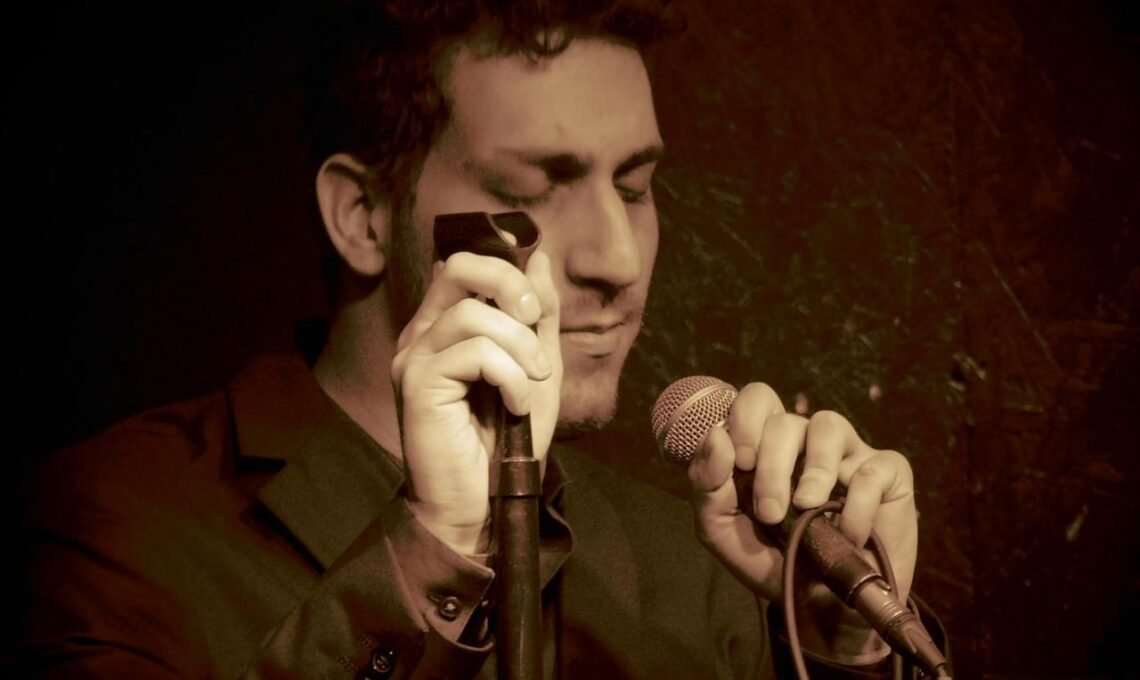
For many artists, music is performance. For Cello, music feels more like survival.
The Pittsburgh-based singer-songwriter, poet, and performer—born Marcello Valletta—creates songs that do not hide behind polish or distance. Instead, his music invites listeners directly into emotional chaos, vulnerability, longing, and introspection. Under the name Cello, Valletta has built a growing reputation for crafting deeply personal, genre-fluid music that blends alternative, spoken word, melodic rap, atmospheric pop, and confessional songwriting into something uniquely his own.
His latest project, Singing to Serpents, is perhaps the clearest reflection yet of who he is as an artist—and as a person.
Across the album’s nine tracks, Cello explores love, obsession, depression, faith, insecurity, desire, and self-discovery with striking honesty. Songs such as “Stay Here,” “Faith,” “Pray,” and “Full Moon” do not offer neat emotional conclusions. Instead, they capture the feeling of being inside emotional conflict while it’s happening.
That immediacy is intentional.
“I think a lot of my music comes from trying to process things in real time,” Cello has explained in conversations surrounding the album. “I’m not really interested in pretending I have everything figured out.”
That perspective is deeply tied to his lived experience with Autism Spectrum Disorder and ADHD—something Cello speaks about openly. Rather than viewing neurodivergence as something to conceal, he sees it as inseparable from his creativity and emotional depth.
“I experience everything intensely,” he says. “Thoughts, emotions, relationships, sound—it all hits hard. Music became a place where I could actually organize those feelings.”
That emotional intensity runs throughout Singing to Serpents. Repetition appears frequently in both the lyrics and structure of the songs, creating a hypnotic quality that mirrors obsessive thoughts and emotional fixation. The opening track, “Stay Here,” revolves around the repeated plea, “Won’t you stay here? She said, my lover, my lover,” transforming the phrase into something somewhere between memory, desire, and desperation.
Elsewhere, “Faith” wrestles openly with self-doubt and personal identity. The repeated line, “I need strong faith in my abilities,” becomes less an affirmation than a survival mantra. On “Sucks to Be Used,” bitterness and heartbreak collide in sharp emotional bursts, while “Cravings” and “Full Moon” explore desire with cinematic, almost dreamlike imagery.
Yet despite the darkness that occasionally surfaces, the album never feels hopeless.
Instead, Singing to Serpents feels honest.
That honesty may stem from Valletta’s background outside music. Before launching his recording career, he spent years immersed in acting and poetry. Storytelling has always been central to his creative life, but music gave him a new way to communicate emotional complexity.
“As an actor, you step into someone else’s emotions,” he says. “With music, there’s nowhere to hide. It’s you.”
That openness has resonated strongly with listeners, particularly those who relate to neurodivergence, emotional overstimulation, and mental health struggles. Many fans have connected to the way Cello writes about hyperfocus, loneliness, masking, relationships, and emotional regulation without filtering the experience into something overly polished or commercial.
Importantly, Cello doesn’t frame his autism or ADHD as limitations. Instead, he speaks about them as part of the lens through which he experiences the world creatively.
“There’s beauty in seeing things differently,” he says. “Even when it’s overwhelming.”
That philosophy extends into the sonic identity of Singing to Serpents. The album resists easy categorization, shifting between atmospheric confessionals, moody alternative textures, spoken-word intimacy, and emotionally charged melodic passages. The production often leaves space for silence and repetition, allowing the emotional tension of the lyrics to remain front and center.
Critics have praised the project for its vulnerability and refusal to conform to traditional genre expectations. Some have compared its emotional candor to confessional alternative artists, while others have highlighted the poetic qualities of Valletta’s songwriting.
Still, Cello remains focused less on labels and more on connection.
“I just want people to feel less alone,” he says.
That sentiment may ultimately define both the artist and the album. In a musical landscape often dominated by image and emotional detachment, Cello’s willingness to expose uncertainty, contradiction, and emotional struggle feels refreshingly human.
Singing to Serpents does not present a perfect narrator. It presents a real one.
And perhaps that is why Cello’s music continues to resonate.
Because beneath the atmosphere, the heartbreak, and the restless energy, there is something deeply recognizable: a person trying to make sense of themselves through art—and inviting listeners to do the same.
–Joe Spartan


Elvira Kalnik Is Redefining What It Means to Be a Modern Artist
Jun 5, 2026
Cathleen Ireland: Crafting Soulful Pop With Heart, Vision, and Fearless Authenticity
May 21, 2026