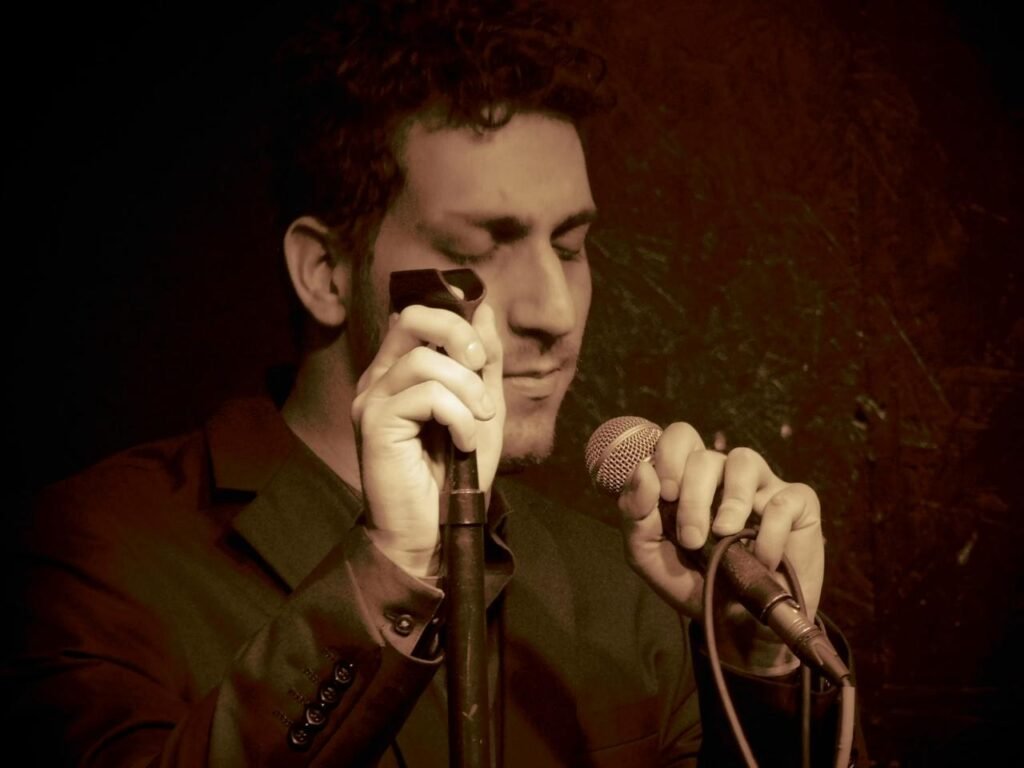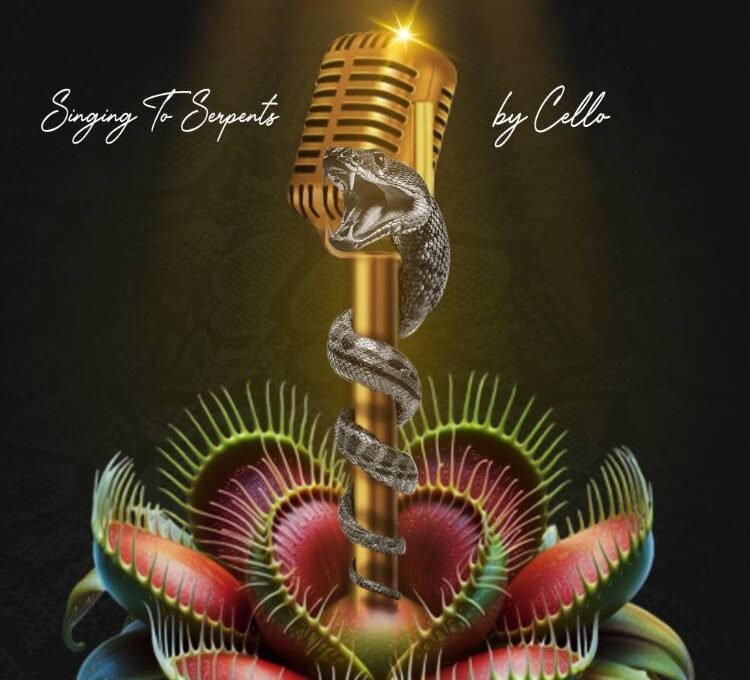
There is a long tradition of artists transforming personal unrest into compelling music. From the confessional intensity of Nine Inch Nails to the poetic dislocation of Jeff Buckley and the late-night emotional spirals of modern alternative R&B, the best records often emerge from contradiction rather than certainty. With Singing to Serpents, Cello—born Marcello Valletta—steps confidently into that lineage, delivering an album that is emotionally volatile, lyrically immersive, and unafraid of exposing the less polished corners of the human psyche.
At first listen, Singing to Serpents feels less like a conventional album and more like a private transmission accidentally left on. Across nine tracks, Cello blurs the boundaries between melodic rap, spoken-word poetry, alternative pop and atmospheric confession, creating a sound that feels intimate to the point of discomfort. Yet it is precisely that vulnerability that gives the record its strange magnetism.
The opening track, “Stay Here,” immediately establishes the album’s emotional terrain. Built around hypnotic repetition and nocturnal atmosphere, the song captures the frantic energy of obsession and emotional dependency. “Won’t you stay here? She said, my lover, my lover,” Cello repeats, turning the phrase into less of a chorus and more of a psychological loop. The song’s fragmented structure mirrors the instability of its narrator, someone suspended between longing and collapse.
It’s a bold way to begin an album, and importantly, Cello never retreats from that intensity.
“Elevate” follows with a colder, sharper edge. The production is sparse yet immersive, allowing the lyrics to dominate. Themes of ego, ambition and self-worth drift in and out of focus like thoughts racing through an overactive mind. There are moments where the song feels almost improvisational, but beneath the chaos lies a clear emotional purpose. Cello’s writing often functions this way throughout the record: impulsive on the surface, meticulously revealing underneath.
Then there’s “Sucks to Be Used,” arguably one of the album’s most confrontational moments. The refrain is intentionally abrasive, but what makes the song effective is the emotional exhaustion simmering beneath the bravado. Cello never paints himself as hero or victim. Instead, he allows contradictions to coexist. Love and resentment occupy the same breath. Vulnerability and ego become inseparable.
That duality becomes central to the album’s identity.
Midway through the record, Singing to Serpents pivots toward spirituality and self-examination with “Pray” and “Faith.” These are not religious songs in the traditional sense. Rather, they explore belief as emotional survival. On “Faith,” Cello repeatedly insists, “I need strong faith in my abilities,” a line that lands somewhere between affirmation and desperation. It’s one of the album’s most revealing moments because it exposes the insecurity driving much of the record’s emotional turbulence.
What separates Singing to Serpents from many contemporary releases is its refusal to sanitise itself. Modern music often rewards emotional performance while avoiding genuine emotional risk. Cello takes the opposite approach. The album is messy because the feelings are messy. Repetition becomes obsession. Contradiction becomes honesty. There are moments where the songs feel almost too intimate, as though listeners are overhearing thoughts never intended for public consumption.
Tracks like “Cravings” and “Full Moon” lean heavily into atmosphere, using sensual imagery and shadowy production to create a cinematic sense of emotional intoxication. “Full Moon” in particular feels genuinely haunting, presenting romance as something simultaneously seductive and dangerous. There’s a gothic undercurrent running through the song—a sense that love here is transformative, but not necessarily healing.
The closing track, “Sleeping,” offers something approaching vulnerability without performance. The aggression and bravado that surface earlier on the album soften into exhaustion and longing. It feels like the emotional comedown after the psychic storm that precedes it.
Cello’s background as both actor and poet undoubtedly informs the album’s theatricality, but what makes Singing to Serpents resonate is its sincerity. This is not an artist hiding behind aesthetics or trends. The record feels lived-in. Every contradiction, every repeated phrase, every moment of emotional overstimulation contributes to a portrait of someone trying to make sense of themselves in real time.
And perhaps that is the album’s greatest achievement.
Singing to Serpents doesn’t offer neat resolutions or carefully packaged revelations. Instead, it captures the confusion, intensity and vulnerability of being emotionally exposed in a world that often rewards detachment. In doing so, Cello has created a record that feels deeply modern—not because it follows trends, but because it understands the emotional fragmentation of contemporary life.
Uncomfortable at times, hypnotic throughout, Singing to Serpents is a striking debut statement from an artist unafraid to let the cracks show.
–Blake Marcus